Turn criminal discovery into a defense, from one workspace.
CrossLogic transforms criminal discovery into source-cited timelines, connected entities, evidence findings, and case strategy, all within a single workspace. Every output traces back to the document it came from, so you can verify everything against the record.
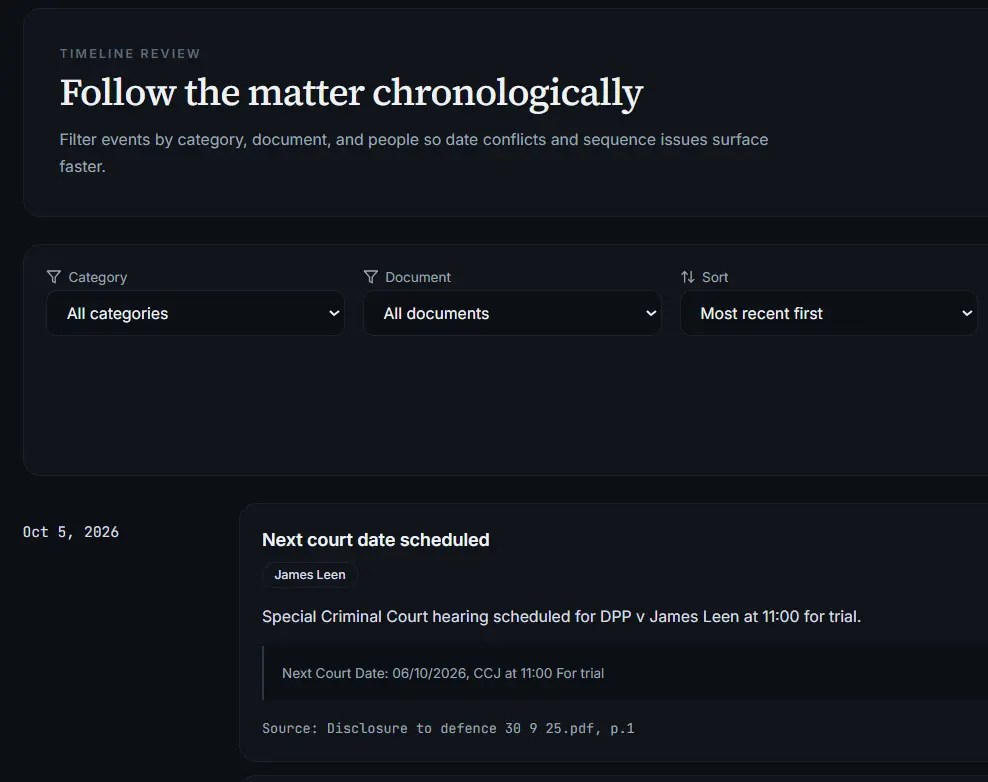
Timeline Builder
Every event is extracted and organized into a structured, source-cited timeline, helping attorneys reconstruct events, identify inconsistencies, and review complex cases without manually building chronologies.
- Thousands of events organized without manual entry
- Every entry linked to the source document and page
- Filter and search to find the moments that matter
People & Entities
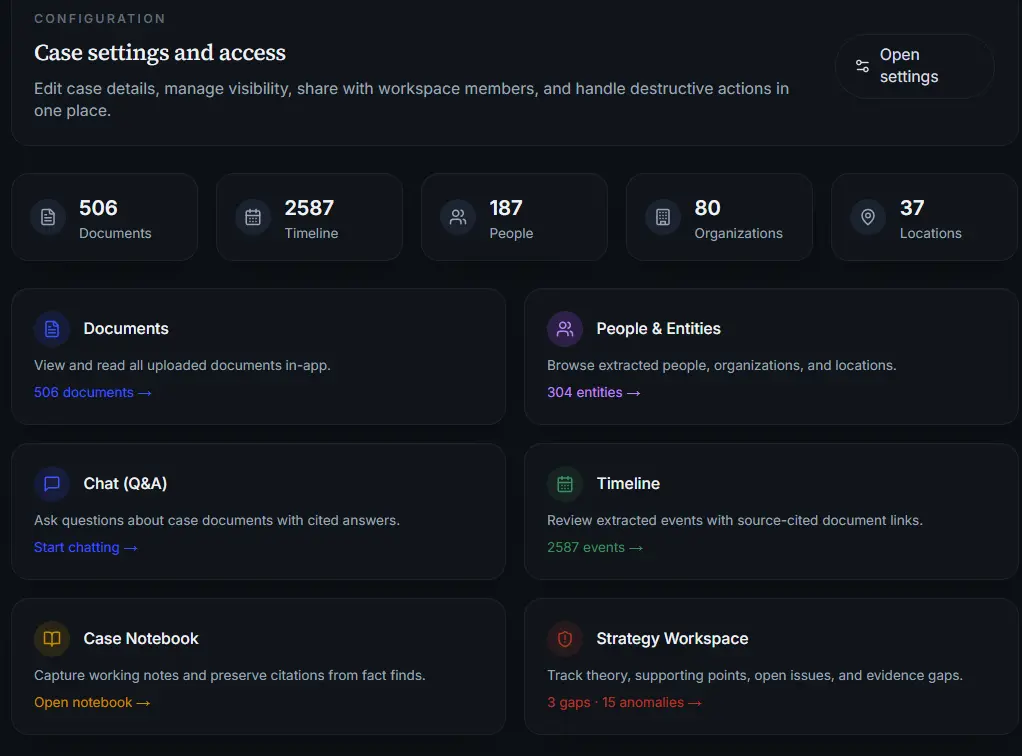
Automatically identify and connect people, agencies, organizations, locations, and relationships across discovery, making it easier to understand who was involved, when, and how they connect to the facts of the case.
- Automatic people and entity extraction
- Each reference tied to its source citation
- See connections across the full discovery file
Evidence Intelligence
Surface relevant facts across thousands of pages of discovery and trace every finding back to its original source, reducing time spent searching and increasing confidence in your analysis.
- Locate relevant facts without manual page-turning
- Each finding connected to the underlying document
- Built to support, not replace, attorney judgment
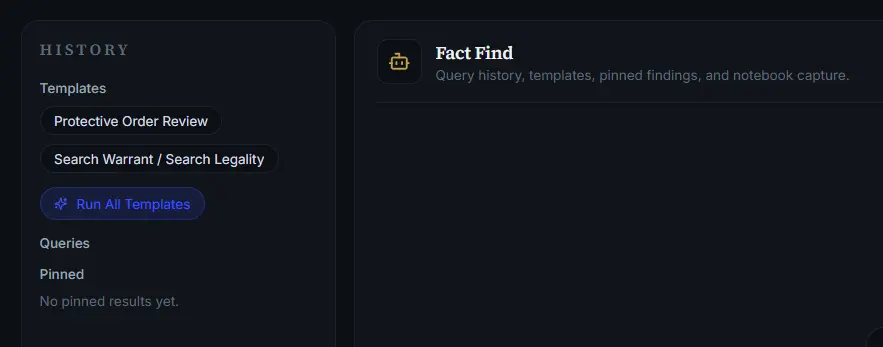
Fact Find
Query history, templates, pinned findings, and notebook capture.
## Case Summary: State v. [Redacted]
#### Gist of the Case
Based on the discovery materials reviewed, CrossLogic identified key witness statements, timeline events, and evidentiary documents relevant to the allegations. Findings are linked directly to source documents for attorney verification.
#### Main Evidence Identified
The system surfaced recurring references across reports, statements, and document metadata. Each finding is organized into a source-cited summary so counsel can quickly review the underlying record, compare facts, and confirm accuracy.
Affidavit sworn and subscribed
Same event title recorded across 516 days (3 distinct calendar dates).
21st day of October, 2023 vs 23rd day of May, 2022 vs 2nd day of October, 2023Arrest warrant issued
Same event title recorded across 503 days (2 distinct calendar dates).
3rd Day of October, 2023 vs May 18, 2022Bond conditions ordered
Same event title recorded across 210 days (2 distinct calendar dates).
10/4/2023 vs 5/1/2024Business Record Affidavit sworn and notarized
Same event title recorded across 918 days (2 distinct calendar dates).
18th day of September, 20 23 vs 24 day of March, 2026Anomaly Flagging
Surfaces inconsistencies, missing items, and evidence gaps for attorney review, using forensic logic encoded from decades of investigative experience.
- Highlights what does not line up across the record
- Flags missing items and evidence gaps
- Presented for your review, with sources attached
Chat Q&A
Ask plain-language questions about the case and receive answers tied to source documents, so you can verify each response against the record.
- Question the file in plain language
- Answers carry citations to the underlying documents
- Verify every response against the source
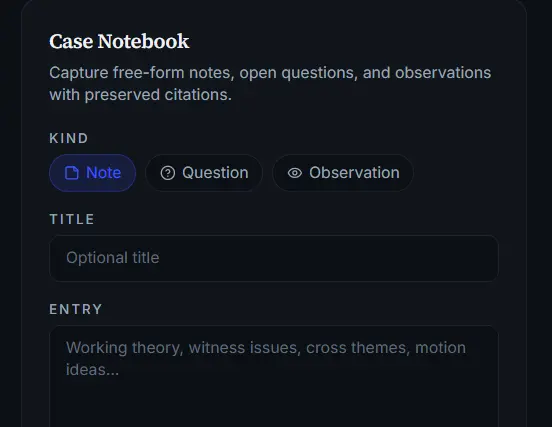
Case Notebook
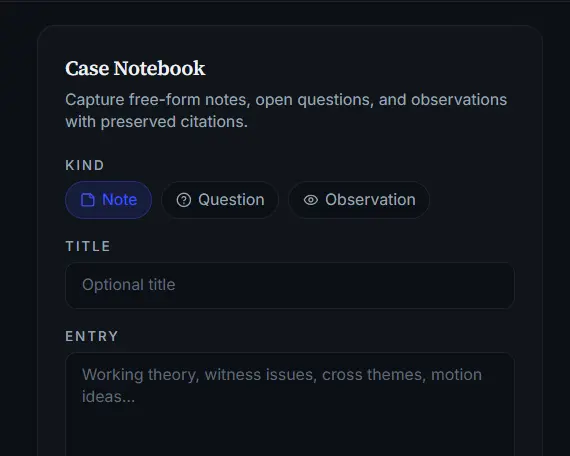
Keep working notes with citations tied to your fact findings. Step away for months and return to find everything where you left it.
- Notes anchored to the source material
- Persistent context across a long-running matter
- No rebuilding the case from scratch each time
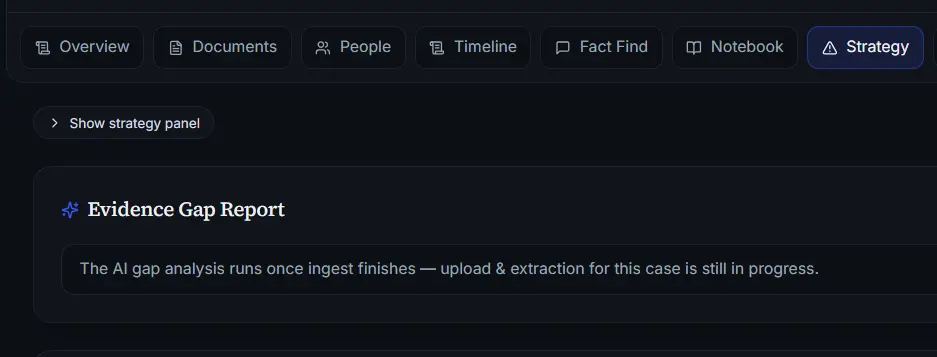
Strategy Workspace
Organize theories, supporting facts, open questions, and evidence gaps in one persistent workspace, tested against the actual facts of the case.
- Lay out theories against the supporting record
- Track open questions and evidence gaps
- One place to develop the defense over time
Trial Notebooks
Transform discovery review into organized, citation-backed trial preparation materials that keep witnesses, evidence, and key arguments ready for hearings and trial.
- Citation-backed materials organized for court prep
- Pulled together from your fact findings and notes
- Ready to refine as the matter develops
Questions attorneys ask before using CrossLogic.
CrossLogic supports common criminal discovery materials, including PDFs, reports, emails, messages, images, and other standard case documents used during criminal defense review.
Yes. CrossLogic provides source-cited outputs that link findings back to the underlying discovery materials, allowing attorneys to independently verify information and conclusions.
No. CrossLogic is a case analysis and discovery management platform designed to support legal review and strategy development. Attorneys remain responsible for all legal analysis, decisions, and representation.
Yes. CrossLogic was developed for real-world criminal defense casework and is used by the team that built it during active case analysis and forensic review.
CrossLogic is designed for the review of sensitive criminal case materials. Case information remains separated by workspace, and access is controlled by authorized users.
Processing time varies based on file volume and complexity, but CrossLogic is designed to begin organizing discovery into timelines, entities, findings, and case intelligence shortly after upload.
Yes. Schedule a demo to see how CrossLogic works with criminal discovery workflows and determine whether it is the right fit for your practice.
Built for the formats criminal discovery actually arrives in.
CrossLogic is designed to organize evidence across documents, communications, media files, and structured records within one workspace.
Load your case. See what we see. Then decide.
Start with a real case, review source-cited outputs, and decide after you see CrossLogic work.
REQUEST A DEMO